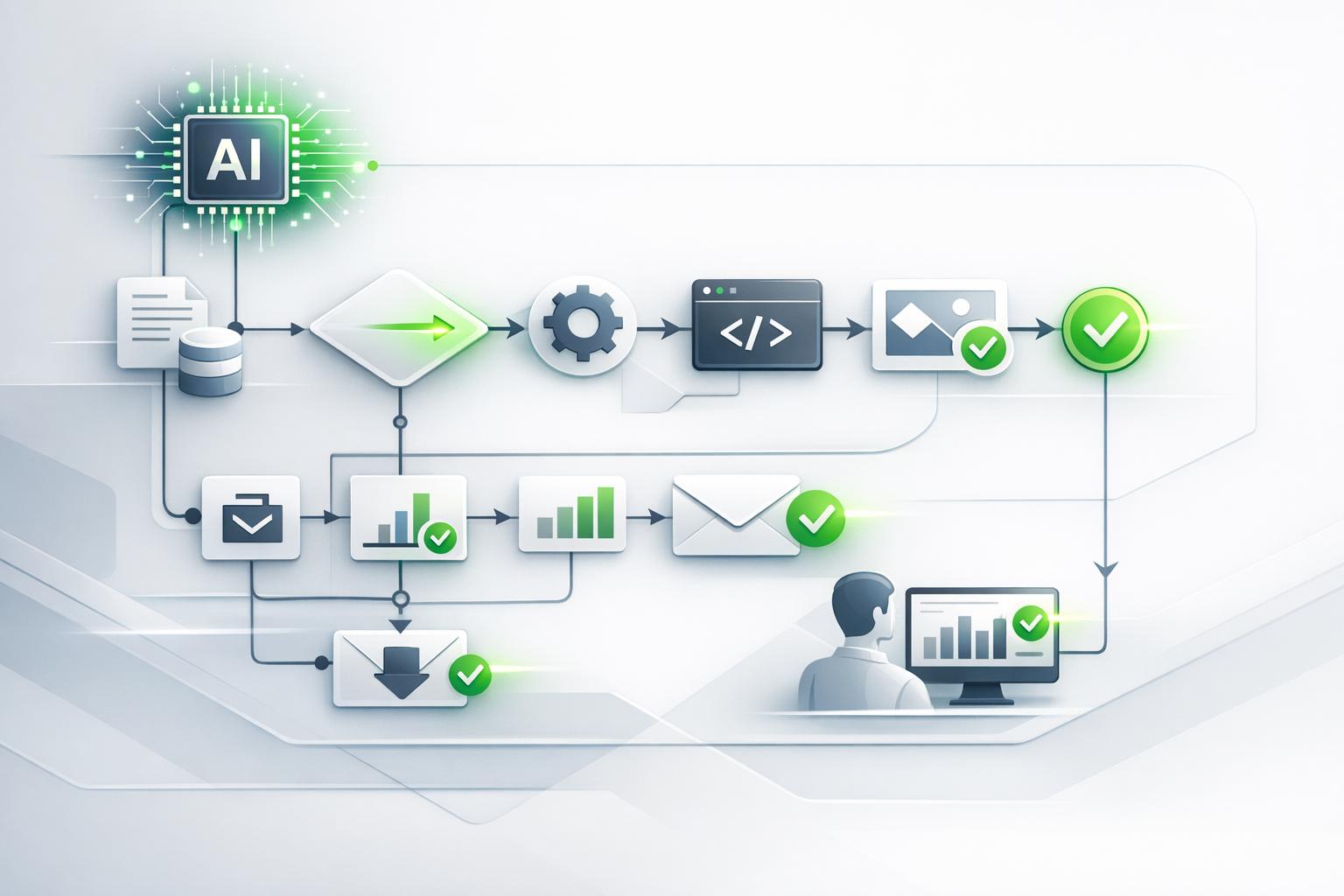
AI projects often fail due to avoidable mistakes, leading to wasted resources and missed opportunities. The key to success lies in addressing these five common errors:
- Poor Data Preparation: Bad data leads to unreliable results. Ensure data is clean, relevant, and compliant with privacy laws.
- Lack of Clear Goals: Define specific, measurable objectives before starting any AI project.
- Wrong Tool Choice: Select tools based on your business needs, not just popularity or cost.
- Insufficient Training: Train employees to use AI effectively and integrate it into their daily tasks.
- No Human Oversight: Regularly monitor AI outputs and maintain human control over critical decisions.
Table of Contents
ToggleAvoid These Costly Mistakes When Using AI in Your Business (And What To Do Instead)
Mistake 1: Poor Data Preparation
The success of AI hinges on the quality of the data it processes. Yet, many organizations dive into AI projects without adequately preparing their datasets. This oversight often results in unreliable outputs and costly setbacks.
When AI systems are trained on flawed data – whether incomplete, outdated, or biased – the results can be disastrous. These errors ripple through business operations, harm customer trust, and undermine the very purpose of using AI. Simply put, bad data leads to bad outcomes. Let’s break down why clean, relevant data is essential and how proper management can save both time and money.
Why Clean and Relevant Data Matters
When it comes to data preparation, quality trumps quantity. It’s not about how much data you have but whether it’s accurate, complete, and aligned with the specific problem you’re addressing.
Common issues like duplicate records, missing values, outdated information, and inconsistent formatting can derail AI models. For instance, duplicate entries or mismatched formats make it harder for AI to recognize patterns effectively.
Relevance is just as important. Feeding your AI system every piece of data you have doesn’t guarantee better results – it often does the opposite. Irrelevant data confuses models and reduces their performance. For example, a retail company trying to predict seasonal demand doesn’t need to include data on office supply purchases or employee vacation schedules. Including unrelated information only muddies the waters.
The data cleaning process involves validating sources, removing duplicates, standardizing formats, and verifying accuracy. While this can be a time-consuming effort, the payoff is worth it. Organizations that prioritize thorough data preparation consistently see stronger, more reliable AI performance.
Data Privacy and Legal Requirements
Data preparation isn’t just about accuracy – it’s also about compliance. Mishandling data can lead to serious legal and financial consequences, often far exceeding the cost of doing things right from the start. In the U.S., companies must navigate a maze of federal and state privacy laws, with penalties for violations reaching millions of dollars.
For example, the California Consumer Privacy Act (CCPA) and its amendment, the California Privacy Rights Act (CPRA), impose strict rules on how businesses collect, process, and store personal data. Companies using AI to analyze customer data must secure proper consent and be transparent about how that data is used. And this isn’t just a California issue – similar laws are popping up across the country.
Certain industries face even stricter regulations. Healthcare and financial services are prime examples. The Health Insurance Portability and Accountability Act (HIPAA) governs how medical data can be used in AI, while financial institutions must comply with laws like the Fair Credit Reporting Act when making lending decisions. These sectors require specialized protocols that go beyond general AI practices.
For U.S. businesses dealing with European customers, compliance with the General Data Protection Regulation (GDPR) is non-negotiable. GDPR mandates explicit consent for AI processing and ensures customers have the right to understand automated decisions affecting them.
As the legal landscape evolves, proactive compliance not only helps avoid penalties but also builds trust with customers – an increasingly valuable asset in today’s market.
Better Data Management Methods
Ensuring data quality and compliance is just the beginning. To maintain strong AI performance over time, organizations need robust management practices. Clear data governance policies are essential. These policies should outline who can access specific data, how quality is maintained, and what approval processes are required for training datasets.
Regular data audits are another key step. Monthly or quarterly reviews can help catch errors early, ensuring data remains accurate, complete, and aligned with current business goals. Automated tools can assist by flagging inconsistencies, but human oversight is still critical for context-specific validation.
Version control for datasets is another must-have. Keeping detailed records of changes – like what was added, removed, or modified – ensures reproducibility. This is especially important when troubleshooting AI performance issues or meeting regulatory audit requirements.
Tracking data lineage adds another layer of transparency. Knowing where your data comes from and how it flows through your systems helps identify biases and ensures compliance with usage restrictions. When issues arise, clear lineage documentation allows you to quickly pinpoint affected datasets and models.
Finally, implement validation checkpoints to filter out low-quality data before it enters your systems. Automated rules can catch obvious errors, such as invalid dates or out-of-range values, while statistical analysis can detect subtler issues.
Creating feedback loops between AI performance and data quality further strengthens your system. If accuracy begins to slip, the root cause often lies in data drift or degradation. Regular monitoring of both AI outputs and data quality metrics enables proactive updates, keeping your AI running smoothly instead of scrambling to fix problems after they occur.
Mistake 2: No Clear Plan or Goals
Diving into AI without a well-thought-out strategy is like setting out on a road trip without a map – you’ll burn through resources without ever reaching your destination. Many businesses get swept up in the excitement of AI’s potential and start adopting tools without defining what success looks like. This scattershot approach often leads to wasted budgets, frustrated teams, and projects that result in flashy demos but fail to deliver measurable results. Without a clear focus, companies risk chasing misaligned goals and setting themselves up for disappointment.
This enthusiasm sometimes pushes organizations to launch multiple AI projects without tying them to specific business outcomes. You might see companies rolling out chatbots, automating workflows, or analyzing data – yet none of these efforts are clearly connected to meaningful results. The outcome? Teams spend months building sophisticated models that either sit unused or create more problems than they solve.
Measuring the return on AI investments becomes nearly impossible without clear objectives. For instance, deploying a customer service chatbot won’t add value if your current team is already handling inquiries effectively. The key to successful AI implementation is starting with a clear understanding of the problem you’re trying to solve – not just chasing the latest tech trend.
Finding Specific Use Cases
The best AI projects are those that address real, tangible business challenges. Start by identifying areas where your team spends too much time on repetitive tasks, where human errors lead to costly mistakes, or where customer complaints point to recurring issues.
Take customer service as an example. If your support team spends hours answering routine questions – like order updates, return policies, or basic troubleshooting – an AI assistant could step in to handle these repetitive inquiries. This would free up your human agents to focus on more complex and value-driven tasks.
AI also shines when it comes to cutting costs through automation. Tasks like processing invoices, reviewing expense reports, or handling data entry can be done faster and more accurately with AI, reducing operational costs and improving efficiency.
Another area where AI can make a difference is optimizing workflows. For processes involving multiple steps and departmental handoffs, AI can track progress, flag bottlenecks, and automatically assign tasks to the right team members. In manufacturing, predictive AI models can forecast maintenance needs, helping to minimize unplanned downtime and repair costs.
The secret is to define your goals precisely. Instead of vaguely aiming to "improve customer service", set measurable targets like reducing response times by a specific percentage. This clarity helps you choose the right tools and evaluate their effectiveness.
Matching AI Projects with Business Goals
Once you’ve pinpointed specific challenges, make sure every AI project aligns with measurable business objectives. If you can’t tie your initiative to outcomes like higher revenue, lower costs, or better customer satisfaction, it’s a sign you may be solving the wrong problem.
Revenue-driven goals could include increasing conversion rates, boosting customer lifetime value, or identifying new sales opportunities. For example, a retail company might use AI to analyze purchase patterns and recommend products, measuring success through actual sales growth. On the other hand, cost-saving initiatives might focus on streamlining operations, reducing manual work, or cutting down on errors. A logistics company, for instance, could use AI to optimize delivery routes, reducing fuel expenses and improving efficiency.
When it comes to customer satisfaction, AI can help tackle specific pain points. If satisfaction scores are lagging, look at how AI can address issues like faster response times, more accurate order fulfillment, or personalized customer experiences.
AI is also a powerful tool for managing risks. Financial institutions, for example, use AI to detect fraudulent transactions with fewer false positives while maintaining high accuracy. Similarly, insurance companies are leveraging AI to speed up claims processing and reduce errors.
The key to success lies in building a framework that connects each project to clear key performance indicators (KPIs), measurable improvements, and realistic timelines. This framework will serve as your guide throughout the project, helping you prioritize features, allocate resources, and make informed decisions.
Setting Realistic Goals and Measurements
Just like with data management, setting realistic and measurable goals is critical for AI success. Unrealistic expectations can derail progress. Many organizations anticipate dramatic results right away, only to feel let down when those results don’t materialize. Smart goal-setting means understanding what AI can realistically achieve within your current constraints and timeframes.
Start by establishing a baseline for your current performance. Instead of expecting overnight transformations, aim for incremental improvements over a reasonable timeframe.
Financial goals should account for implementation costs and the inevitable learning curve. While it’s tempting to expect immediate savings, plan for gradual reductions in expenses as the system stabilizes and your team gets comfortable with the new technology.
When setting time-based goals, include buffer periods for testing and fine-tuning. For instance, if you’re using AI for invoice management, expect a transition period where both the old and new systems may need to run in parallel while your team adapts.
For accuracy improvements, compare your AI’s performance against current benchmarks rather than an idealized standard. It’s often more productive to aim for steady, incremental gains than to chase perfection from the start.
Finally, define what “good enough” looks like for your business. Perfection isn’t always necessary – what matters is whether the improvements bring meaningful value. By setting achievable targets, you’ll keep your team motivated and set the stage for continued progress over time.
Mistake 3: Wrong Tool Choice and Setup
Selecting the wrong AI tool or failing to set it up correctly can derail even the most promising projects. Too often, businesses opt for the most popular or cheapest solution without considering whether it aligns with their specific needs. Others rush through the setup process, skipping the necessary customization that ensures the tool integrates seamlessly into their workflows. The result? An AI system that either sits idle or fails to deliver expected results because it doesn’t fit into existing processes.
Many companies assume that AI tools will work perfectly straight out of the box. But the reality is different. Most AI tools require thoughtful configuration, ongoing maintenance, and updates to function effectively. Without a clear integration strategy, even the most advanced tools can create unnecessary complications instead of solving problems.
Another common mistake is focusing too much on flashy features instead of actual outcomes. A tool might look impressive on paper, but if it doesn’t address your specific business challenges or demands technical expertise your team lacks, it won’t provide the value you’re looking for. The key is to align the tool’s capabilities with your real-world needs – not just its marketing claims.
Picking the Right AI Tools
Choosing the right tools is critical to achieving meaningful results. Success often starts with selecting solutions that match your business goals and technical resources. Instead of simply going for the most popular option, evaluate how well each tool handles your specific use cases and integrates with your systems.
Here’s what to prioritize:
- Customization options: Generic solutions rarely fit unique business processes. Look for tools that allow you to train models with your data, adjust responses, and fine-tune behavior to suit your requirements. For instance, a customer service AI should learn your company’s tone, understand your products, and follow your support protocols.
- Scalability: A tool that works for a small team might not meet the demands of an entire organization. Think about where your business will be in the next year or two. Can the tool handle increased workloads? Does it offer features like enhanced security, user management, and reporting for larger operations?
- Technical requirements and costs: Be honest about your team’s technical expertise. If you lack IT resources, prioritize tools with robust customer support. Also, consider all costs – implementation, training, maintenance, and integration – not just the subscription fee.
- Security and compliance: As AI tools handle more sensitive data, ensure they meet industry regulations and provide strong data protection. This includes knowing where your data is stored, how it’s encrypted, and what access controls are in place.
Once you’ve chosen the right tools, the next step is ensuring smooth integration into your existing systems.
Making Integration Work Smoothly
Integrating AI tools effectively means creating workflows that enhance productivity instead of adding unnecessary steps. This requires careful planning and technical alignment.
- API compatibility: Check that the AI tool can connect with your current systems via robust APIs. Whether it’s your CRM, email platform, or project management software, seamless data sharing is essential.
- Data flow mapping: Understand how information will move between systems. Identify where your data resides and what adjustments are needed for the AI to use it effectively.
- Workflow redesign: Adjust processes to leverage the AI’s strengths rather than forcing it into existing workflows. This might involve automating approvals, reorganizing task assignments, or streamlining data collection.
- Testing environments: Set up a separate testing area to resolve integration issues before rolling out changes to live systems. This reduces the risk of disrupting ongoing operations.
- User access controls: Define who can access specific features and data while maintaining security. Ensure permissions align with your existing user management practices.
Tracking and Updating AI Systems
Keeping AI systems running smoothly requires regular monitoring, updates, and security checks. Unlike traditional software, AI tools need frequent adjustments to stay effective.
- Performance monitoring: Track both technical and business metrics. While technical metrics include response times and error rates, business metrics measure whether the AI achieves its goals, like reducing ticket resolution times or boosting customer satisfaction. Set up alerts for performance dips to address problems quickly.
- Model updates: Regularly review and update models to reflect changing business needs. Establish a schedule – monthly, quarterly, or based on performance thresholds – to keep the system aligned with your goals.
- Security maintenance: Apply patches, update access controls, and review data handling practices to protect sensitive information.
- Backup and recovery: Regularly back up configurations, training data, and integration settings. Test recovery procedures to ensure quick restoration in case of failures.
- Cost optimization: Monitor usage patterns and compare them with your plan limits. Adjust configurations or explore new pricing options to manage costs effectively.
sbb-itb-7878072
Mistake 4: Lack of Training and Change Management
While integrating the right data and tools is a crucial step, ensuring your team is trained and ready to embrace these changes is just as important. Even the most advanced AI tools can fall flat if employees aren’t equipped to use them effectively. Many organizations pour resources into AI but fail to address the human side of implementation, leading to underutilization or misuse. Without proper guidance, teams may avoid the tools altogether or use them incorrectly, which only fuels doubts about AI’s value.
A common issue stems from assumptions. Leaders often think that because AI tools are designed to be intuitive, employees will figure them out on their own. But there’s a big difference between knowing how to navigate basic features and truly leveraging a tool to achieve meaningful outcomes. For instance, someone might know how to ask ChatGPT a question but lack the skills to craft prompts that generate actionable insights. Without this deeper understanding, AI can feel more like a distraction than a productivity booster.
Once you’ve chosen the right tools, the next step is preparing your team. This is where structured training programs and thoughtful change management strategies come into play.
Teaching Teams About AI Tools
Training isn’t just about showing employees how to use AI – it’s about weaving the technology into their daily routines to deliver better results. The best training programs combine hands-on practice with real-world scenarios that employees encounter regularly.
Tailored learning is far more effective than one-size-fits-all sessions. Different roles within your organization require different AI skills. For example:
- Marketing teams: Focus on creating better content prompts.
- Customer service reps: Learn to resolve issues faster with AI assistance.
- Sales teams: Use AI to qualify leads and craft follow-up messages.
By customizing training to specific job functions, you make it more relevant and immediately applicable.
Interactive, workshop-style sessions often work better than traditional lectures. Employees can practice using AI tools in scenarios they deal with every day. For example, customer service reps might draft responses to inquiries with AI, while marketing teams could experiment with generating social media posts for upcoming campaigns. This hands-on approach not only builds confidence but also helps employees see what the tools can really do.
AI tools evolve quickly, so ongoing support is essential. Consider appointing "power users" or internal champions who can help troubleshoot and share best practices. Create a repository of documentation with successful use cases, common challenges, and solutions. Regular check-ins during the first few months can also help address any hurdles early on.
Lastly, focus your training on outcomes rather than features. Instead of overwhelming employees with every possible function, show them how AI can directly improve their work. For instance, demonstrate how customer service teams can cut response times or how marketing teams can generate more engaging content. When employees see clear, measurable benefits, they’re more likely to embrace the technology.
Explaining AI’s Value to Staff
After training, it’s equally important to communicate the "why" behind AI adoption. Employees need to understand not just what AI does, but how it enhances their work and makes their lives easier. Clear communication can help reduce anxiety and build trust.
Emphasize that AI is an aid, not a replacement. Frame it as a tool to handle repetitive tasks, freeing up time for higher-value activities like problem-solving, creativity, and relationship-building. For example, explain how AI can draft initial email responses, allowing customer service reps to focus on resolving complex issues and improving customer satisfaction. This perspective helps employees see AI as a partner rather than a threat.
Highlight how AI addresses specific pain points. If your team struggles with tedious data entry, show them how AI can automate these tasks. If they spend too much time drafting reports, demonstrate how AI can create a solid starting point. When employees see AI solving their everyday challenges, they’re more likely to welcome it.
It’s also important to address concerns about job security. Be upfront: AI will change how work is done, but it also opens doors for employees to develop new skills and take on more strategic roles. Share examples of teams that have used AI to manage growing workloads without cutting staff, showcasing how it can drive growth and improve job satisfaction.
Position AI skills as a career advantage. Explain how mastering these tools not only benefits the organization but also enhances employees’ value in the job market. When people see learning AI as an investment in their professional growth, they’re more likely to embrace it.
Getting Team Support and Use
Gaining team buy-in requires addressing resistance head-on while creating positive experiences that encourage ongoing use. The goal is to turn skeptics into advocates through thoughtful planning and responsive support.
Start with employees who are naturally curious about technology. Let them become early adopters and share their success stories with the rest of the team. Their enthusiasm and practical tips can help sway others.
Offer optional sessions and hands-on trials to let employees explore AI without pressure. This approach creates a safe space for experimenting and learning without fear of mistakes affecting their performance.
Share internal success stories to build credibility. If a team uses AI to improve response times or create better content, highlight those wins. These examples resonate more when they come from colleagues facing similar challenges.
Be transparent about concerns. Whether it’s data privacy, job security, or tool reliability, address questions openly. If you don’t have an immediate answer, acknowledge it and commit to finding one. This honesty helps build trust and shows that leadership takes employees’ concerns seriously.
Stay flexible and adjust based on feedback. Monitor how employees are actually using AI compared to initial expectations. If certain features are underutilized or being used in unexpected ways, investigate why and adapt your approach. Sometimes, the best results come from being willing to tweak the plan.
Finally, recognize and reward adoption. Celebrate employees who successfully integrate AI into their workflows and deliver measurable improvements. This could be as simple as public acknowledgment or as impactful as involving them in future AI tool decisions. Recognition motivates others to follow suit and helps sustain momentum.
Mistake 5: Missing Human Oversight and Feedback
Even with highly trained teams and well-integrated AI tools, a common misstep organizations make is assuming AI can function flawlessly without human supervision. This hands-off approach often leads to avoidable problems that could have been addressed early with proper monitoring.
The risks become especially clear when AI systems are tasked with decisions or content creation that directly impact customers, employees, or business operations. Without human review, AI can stray from its intended purpose, generate biased results, or overlook important subtleties that require human judgment. What starts as a time-saving tool can quickly snowball into errors, compliance headaches, or strained relationships.
When there’s no consistent human involvement, AI systems risk reinforcing errors or failing to catch critical details. This is why strong oversight mechanisms are essential.
Keeping Human Control in Place
Human oversight isn’t about scrutinizing every single AI action – it’s about maintaining control over key processes while letting AI handle routine tasks. The level of oversight should match the potential risks and consequences tied to AI decisions.
For high-stakes situations – like addressing customer complaints or managing large financial transactions – humans should always have the final say. AI can assist by offering suggestions or drafting responses, but a person should review and approve before any action is finalized. This ensures costly mistakes are avoided while still leveraging AI’s efficiency.
Sensitive outputs, such as customer-facing communications or marketing materials, require careful human review to confirm they align with the right tone, messaging, and brand identity.
From the outset, AI systems should include clear override capabilities. Humans must be able to pause, adjust, or reverse AI actions as needed. This could mean having an accessible "stop" button for automated processes or straightforward tools to edit or reject AI-generated content before it’s published.
Approval workflows can also help manage oversight. For less critical tasks – like scheduling or data organization – minimal oversight might suffice. However, more sensitive areas, like customer communications or financial decisions, should go through structured review processes to minimize risks.
Creating Feedback Systems
Feedback systems are vital for turning AI implementation into an ongoing process of improvement. Regular input from users and stakeholders ensures AI systems remain aligned with business priorities and continue to perform effectively over time.
Incorporate built-in feedback tools that allow employees and customers to flag issues or suggest improvements. These tools can be as simple as thumbs up/down buttons on AI-generated outputs or quick feedback forms that take only a few seconds to complete.
Regular team discussions can also uncover patterns or challenges that individual feedback might miss. Monthly check-ins with employees using AI tools offer a chance to discuss what’s working, what’s not, and what could be improved. These conversations often reveal overlooked use cases or highlight training gaps.
Performance tracking should extend beyond basic metrics to include qualitative insights. While metrics like response times and completion rates are important, also keep an eye on accuracy, relevance, and user satisfaction. Establish feedback loops that trigger immediate reviews when performance dips.
Stakeholder input is another key element. Periodic reviews involving department heads, key users, and even customers ensure AI initiatives remain aligned with broader business goals and priorities.
These feedback mechanisms provide the foundation for continuous refinement and improvement of AI systems.
Measuring and Improving AI Performance
Effective oversight requires both manual checks and accurate performance measurements. Monitoring AI systems involves a mix of quantitative metrics and qualitative evaluations tailored to your business goals.
Accuracy metrics should reflect actual performance in real-world scenarios. Track how often human overrides occur, how frequently AI recommendations are accepted, and what common errors arise. For customer service applications, compare resolution rates and satisfaction scores for AI-assisted versus human-only interactions.
Efficiency metrics help quantify AI’s impact. Measure time savings by comparing task completion times before and after AI implementation. Factor in cost reductions from automation while accounting for the time spent on oversight and corrections.
Quality assessments require human evaluation of AI outputs. Regularly review samples of AI-generated content, decisions, or recommendations to ensure they meet your standards. Check for consistency, alignment with your brand, and adherence to established guidelines.
User adoption and satisfaction metrics shed light on how well AI tools are being integrated into workflows. Monitor which features employees use most, which they avoid, and how their usage evolves over time. Regular surveys can gauge user confidence and overall satisfaction with AI tools.
Finally, connect AI performance to business outcomes. Track metrics that directly impact your organization, such as increased sales, improved customer retention, faster project delivery, or lower operational costs.
Automated monitoring systems can help catch issues quickly. Set up alerts for drops in accuracy, spikes in error rates, or declines in user satisfaction to ensure problems are addressed promptly.
Combine all these metrics into regular performance reviews. Monthly or quarterly assessments can identify trends, celebrate successes, and pinpoint areas for improvement. Use these insights to fine-tune AI parameters, update training data, or adjust workflows based on real-world results.
Conclusion: Methods for Better AI Implementation
Getting AI right means steering clear of five major missteps: poorly prepared data, unclear planning, choosing the wrong tools, insufficient training, and a lack of human oversight. These challenges can sidetrack even the most promising AI initiatives, but the good news is they’re completely avoidable with thoughtful preparation.
The foundation of any successful AI project is clean, relevant data and well-defined objectives. Skipping these steps often leads to expensive fixes down the road. Taking the time to ensure data quality and aligning AI efforts with specific business goals can save headaches and set the stage for long-term success.
Even with great data and clear goals, AI won’t deliver results without the right tools, smooth integration, and a well-prepared team. Comprehensive training and effective change management are key – because technology alone doesn’t guarantee success. It’s the people behind the technology that make the difference.
Human oversight plays a crucial role in balancing automation with sound judgment. This ensures AI systems align with your business’s values and objectives. The most effective AI strategies maintain this balance, keeping humans in control of critical decisions.
Expertise is another piece of the puzzle. A lack of in-house knowledge can lead to avoidable mistakes [2]. Bringing in external experts can bridge skills gaps, sidestep common errors [3], and provide valuable strategic insights [4][1].
Finally, keep evaluating. As your business grows and changes, establish feedback loops to monitor AI performance and adapt as needed. Ongoing assessment is vital to maintaining effectiveness over time.
AI success doesn’t come from chasing perfection – it comes from learning, planning, and adapting. By investing in preparation, training, and oversight, your business can turn AI from a potential risk into a powerful strategic tool.
FAQs
How can I make sure my AI projects use high-quality and legally compliant data?
To build AI projects that deliver reliable results and stay within legal boundaries, focus on three critical aspects:
- Data quality: Ensure your data is precise, dependable, and suitable for its purpose. Using flawed or incomplete data can result in inaccurate AI outcomes, which could undermine your project’s goals.
- Compliance: Keep track of relevant laws, especially those related to data privacy, and make sure your methods for gathering and using data align with legal requirements. This helps you avoid penalties and maintain trust.
- Integration: Bring together data from various systems and organize it effectively. A well-structured, unified data source strengthens the foundation of your AI models.
Paying attention to these areas not only enhances the performance of your AI systems but also helps you steer clear of potential legal and ethical issues.
How can businesses ensure their AI projects align with goals and deliver measurable results?
To make sure AI projects truly serve your business goals and deliver actionable results, begin by pinpointing the exact problems you want to tackle and the outcomes you hope to achieve. The focus should remain on how AI can solve these challenges, rather than getting caught up in the allure of the technology itself.
Establish clear, measurable success criteria that align with your business objectives. These might include cutting down on operational downtime, boosting customer satisfaction, or enhancing efficiency. Pay special attention to tracking operational KPIs that showcase tangible impact, rather than solely relying on technical measures like model accuracy. This strategy ensures your AI efforts translate into real value for your organization.
How can businesses ensure AI tools are effective while keeping human oversight in place for critical decisions?
To make the most of AI tools while keeping human oversight intact, businesses need to blend AI’s potential with active human participation. Begin by ensuring that your team has a clear grasp of the AI project’s goals and the specific area it’s designed to address. This clarity minimizes confusion and ensures that the AI’s results align closely with your overall business objectives.
It’s also crucial to establish validation processes to routinely assess the accuracy and relevance of AI-generated outputs. Incorporating manual override options allows human intervention when critical decisions require closer examination. Striking this balance lets businesses tap into AI’s capabilities while maintaining control over key outcomes.