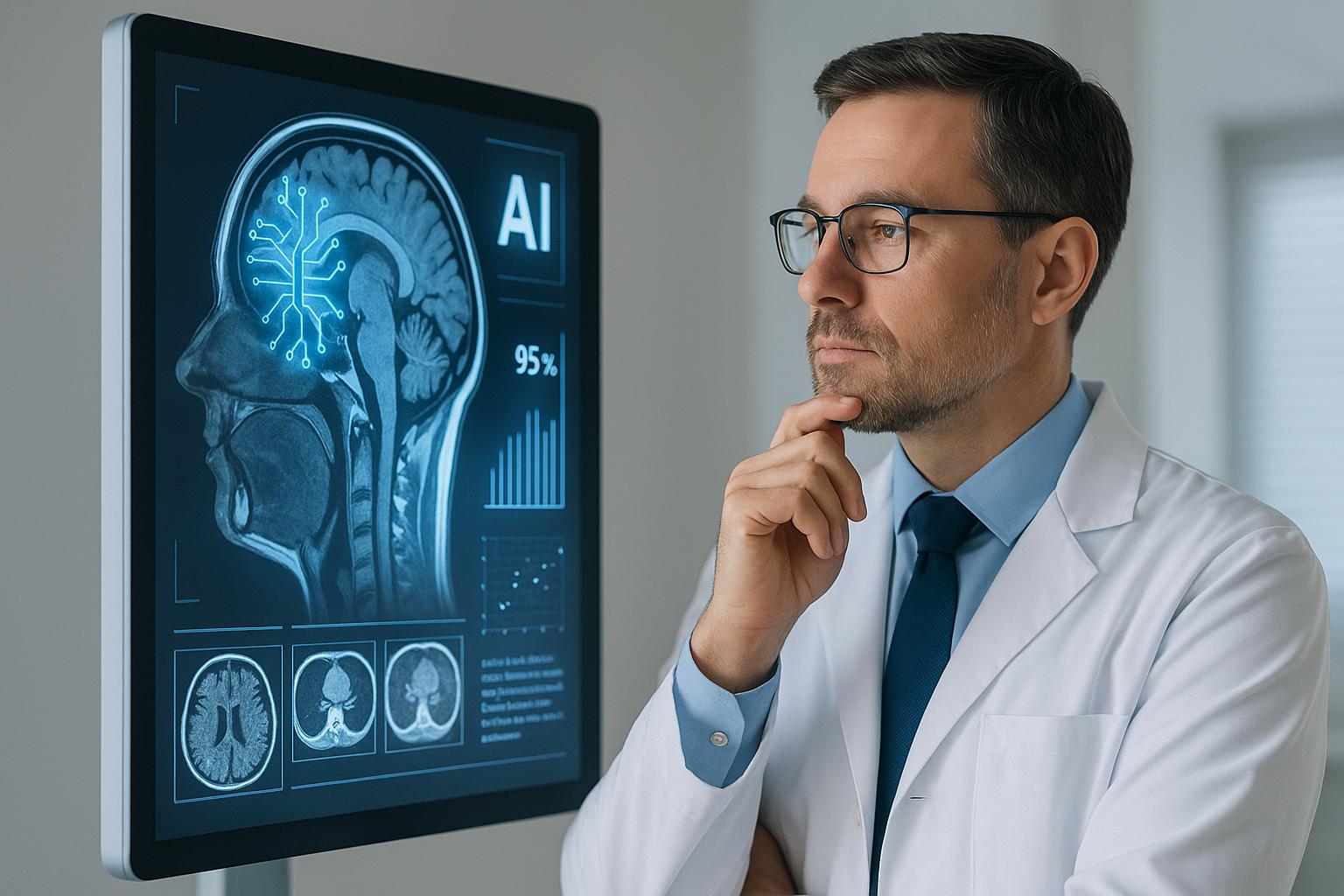
No, AI will not replace radiologists, but it is changing how they work. AI excels at specific tasks like detecting abnormalities in medical images and prioritizing urgent cases. However, it lacks the ability to handle complex decision-making, integrate patient history, or provide the human judgment and empathy required in healthcare.
Here’s the key takeaway:
- What AI Can Do: Analyze images for patterns, flag urgent cases, and automate repetitive tasks like measuring tumor size or generating reports.
- What AI Cannot Do: Handle rare or complex cases, integrate clinical context, or replace the collaboration and trust patients expect from human radiologists.
Radiologists are increasingly using AI as a tool to manage workloads and improve efficiency, but their expertise remains essential for accurate diagnoses and patient care. AI is a partner, not a replacement.
When Will Artificial Intelligence Replace Radiologists? 🤖
Will AI Replace Radiologists? Understanding the Question
The concern about AI replacing radiologists stems from real challenges in the workplace. To understand how likely this is, we need to look at the pressures radiology departments across the U.S. are facing today.
Radiology has grown alongside advancements in imaging technology, driving up the demand for radiological services. However, the number of radiologists hasn’t kept pace, leading to noticeable gaps in staffing and rising workloads. These issues become more apparent when examining the shortages and pressures radiologists deal with daily.
Radiologist Shortages and Workload Pressures
Over the last two decades, the number of imaging studies has skyrocketed. Radiologists who once handled a manageable number of cases are now expected to interpret far more each day. This surge is particularly hard on rural and underserved areas, where smaller hospitals often depend on teleradiology to fill the gaps left by physician shortages.
The sheer volume of scans, coupled with tight deadlines, has led to widespread burnout. Tasks like routine screenings, which can feel monotonous and repetitive, only add to the mental strain. In this context, AI is increasingly seen as a potential ally. Systems that can pre-screen routine cases or flag urgent findings might help radiologists manage their growing workloads more effectively.
Financial pressures in healthcare further complicate matters. Administrators are always looking for ways to cut costs and improve efficiency. AI, with its promise of processing images quickly and consistently, is appealing to those focused on budgets. However, this raises concerns among radiologists about the long-term impact on their jobs.
Despite these pressures, fully replacing radiologists isn’t as simple as automating tasks – it involves far greater complexities.
What Full Replacement Would Actually Require
For AI to completely replace radiologists, it would need to match human expertise across technical, legal, and practical dimensions.
Technically, AI would have to handle the full spectrum of radiological tasks. While current systems are excellent at recognizing patterns in specific scenarios, radiology involves much more. Radiologists integrate data from various imaging modalities, consider a patient’s clinical history, and identify rare or complex conditions. No AI system today can handle all these responsibilities comprehensively.
Legally and regulatorily, barriers are significant. U.S. medical liability laws hold physicians responsible for diagnostic errors and treatment decisions. Current regulations, including those from the FDA, are designed for human oversight, not autonomous AI decision-making. AI systems also require task-specific approvals, meaning a system validated for one use cannot be assumed reliable for another without additional reviews.
Professional standards and hospital credentialing add another challenge. Radiologists undergo rigorous training, certification, and continuous evaluation – standards that don’t yet exist for AI. Additionally, radiology is a collaborative field. Radiologists work closely with surgeons, oncologists, and emergency physicians, offering insights and clinical judgment that AI cannot replicate. These human interactions are essential for shaping treatment plans.
There’s also the matter of patient trust. When facing a serious diagnosis, patients want the reassurance that a qualified physician has reviewed their case and is available to answer their questions. This level of accountability and empathy is something AI cannot provide.
In short, AI is more likely to reshape the role of radiologists than replace them entirely.
What AI Can and Cannot Do in Radiology
Let’s take a closer look at what AI can currently achieve in radiology and where it falls short. While the technology has made strides in specific areas, it still faces significant hurdles that prevent it from replacing radiologists entirely. Understanding these strengths and weaknesses is key to evaluating its role in the field.
AI’s Current Capabilities in Medical Imaging
AI shines when it comes to pattern recognition tasks, especially when dealing with large datasets. It’s particularly effective at identifying abnormalities in medical images, making it a valuable tool for radiologists.
For example:
- Pulmonary nodules: AI can flag potential early-stage lung cancer in CT scans, helping radiologists identify cases that need further attention.
- Bone fractures: By detecting fractures quickly, AI aids in prioritizing patients in busy emergency settings.
- Breast cancer screening: In mammography, AI tools assist by analyzing images for cancer signs, either as a second opinion or by pre-screening cases to highlight normal exams.
FDA clearance for many AI systems highlights their success in tackling specific, well-defined tasks. Another practical use is worklist prioritization, where AI analyzes incoming scans and flags urgent cases like suspected strokes or pulmonary embolisms. This ensures critical cases are reviewed first, potentially improving patient outcomes.
What ties these capabilities together is AI’s ability to handle repetitive, straightforward tasks with clear visual patterns. For questions like “Is there a nodule present?” or “Does this scan show a fracture?”, AI can deliver reliable results. However, its scope remains limited, and that’s where the challenges begin.
AI’s Limitations and Risks in Radiology
Despite its strengths, AI has significant limitations that prevent it from functioning independently in radiology.
- Narrow focus: AI systems are task-specific. A tool trained to detect lung nodules, for instance, cannot suddenly identify liver lesions or brain tumors. Each new application requires separate training and validation, making it impractical and costly to cover the wide variety of conditions radiologists encounter daily.
- Data bias: AI is only as good as the data it learns from. If the training data isn’t diverse enough, the system may perform poorly when applied to different patient populations or imaging equipment. For example, a system trained mostly on a specific type of CT scanner might struggle with scans from different devices.
- Rare and complex cases: While AI handles common patterns well, radiologists often deal with unusual or complicated cases. For instance, a radiologist might need to interpret how a prior surgery impacts current imaging or identify rare complications. AI, which relies on statistical patterns, struggles in these scenarios due to limited exposure to such cases during training.
- Context integration: Radiologists don’t just look at images – they consider lab results, clinical history, and even input from other physicians. AI lacks this ability to incorporate broader context, which is crucial for nuanced decision-making. For example, a finding that looks abnormal might actually be stable and non-concerning when compared to prior studies, something AI typically can’t discern.
- False positives and negatives: AI systems can either over-detect, flagging normal findings as abnormal, or under-detect, missing actual issues. Striking the right balance is tricky, and the ideal sensitivity level may vary depending on the clinical situation.
- Real-world inconsistencies: AI often performs well in controlled research settings but can falter in everyday clinical practice. Factors like image quality, scanner settings, and patient positioning can all impact its accuracy in ways developers might not anticipate.
- Lack of explainability: Many AI systems, especially those using deep learning, operate as “black boxes.” They provide answers without explaining how they arrived at them. This lack of transparency can make it harder for radiologists to trust or validate AI findings and complicates efforts to improve the technology.
- Regulatory and liability concerns: Questions about accountability and the need for ongoing validation limit how autonomously AI can be used. Radiologists remain essential for oversight, especially when it comes to ensuring patient safety and addressing legal complexities.
These challenges underscore a key reality: AI is a powerful tool, but it’s not a replacement for radiologists. It excels at specific, repetitive tasks but lacks the flexibility, judgment, and contextual understanding that human expertise brings to the table.
How AI Supports Radiologists in Practice
AI isn’t here to replace radiologists. Instead, it works alongside them, taking over routine tasks so radiologists can dedicate their time and expertise to complex, high-stakes decisions. This partnership allows radiology departments to manage more cases without sacrificing the quality of care. By integrating seamlessly into existing workflows, AI opens the door for more specialized applications tailored to specific needs.
Workflow Automation and Case Triage
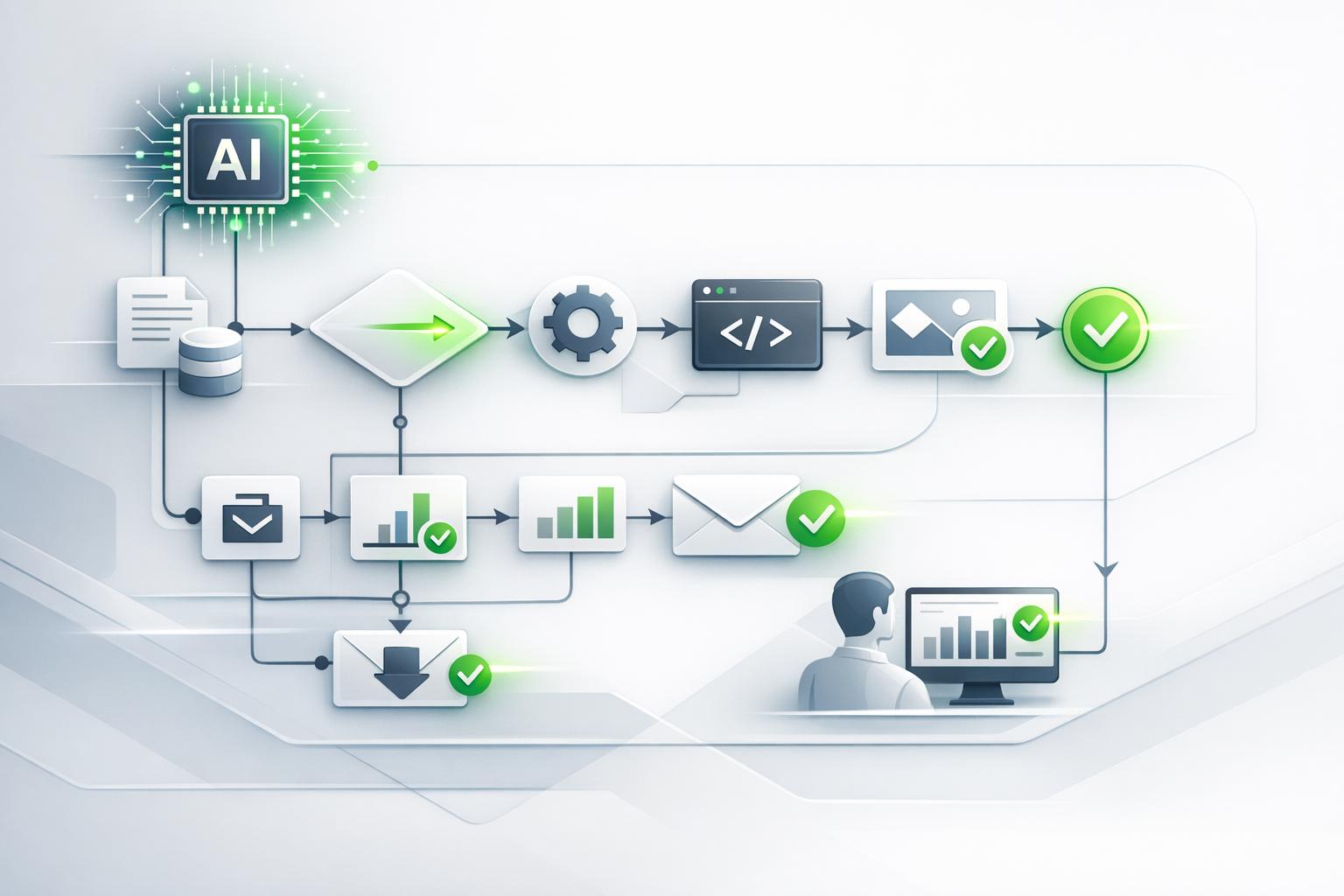
AI’s ability to streamline processes is one of its most practical benefits in radiology. It prioritizes cases based on urgency rather than processing them in the order they arrive.
Take stroke patients, for example. In emergencies like this, every second counts. AI systems can analyze brain CT scans immediately after they’re taken, flagging critical findings and moving these cases to the top of the radiologist’s queue. This same approach applies to other urgent conditions like pulmonary embolisms or pneumothorax, where delays in diagnosis could have life-threatening consequences.
But AI isn’t just for emergencies. In outpatient settings, it can separate normal scans from those that need closer attention. For instance, a radiologist might start their day by reviewing flagged abnormal chest X-rays, then quickly confirm the AI’s assessment of the normal ones. This method reduces the mental strain of examining hundreds of similar images, helping radiologists stay sharp for the cases that require their full attention.
Beyond triage, AI takes on administrative tasks that often consume valuable time. It can calculate tumor dimensions, monitor changes in lesion size, and produce standardized reports with consistent formatting. Some systems even retrieve and display historical imaging for comparison, eliminating the need to dig through archives or wait for files to load.
AI also brings consistency to the table. It applies the same measurement techniques and reporting standards to every case, reducing variability between radiologists – or even the same radiologist on different days. This is especially critical in monitoring cancer patients, where precise measurements guide treatment decisions.
Using ChatGPT and Generative AI Tools in Radiology

While workflow automation transforms how cases are triaged, generative AI tools like ChatGPT are reshaping communication tasks in radiology departments. These tools assist with text-based tasks but always operate under the watchful eye of a radiologist.
For example, generative AI can help draft reports, standardize protocols, or simplify technical information for patients. A radiologist might describe findings using voice recognition software and then rely on AI to format those observations into a polished report with proper medical terminology. The radiologist reviews the draft, ensuring accuracy and adding clinical details that the AI might overlook.
Generative AI also helps with routine communication. When a referring physician asks about the best imaging protocol for a specific scenario, AI can generate a preliminary response based on established guidelines. The radiologist then refines the response, incorporating their clinical experience and any institution-specific preferences.
Protocol development is another area where AI proves useful. When creating or updating imaging protocols, radiologists can use AI to draft initial versions based on existing guidelines. These drafts are then tailored to fit the department’s equipment, patient demographics, and institutional standards.
However, human oversight is non-negotiable. Every AI-generated report, protocol, or communication must be carefully reviewed by a radiologist. Their expertise is essential for catching errors, providing context, and ensuring that recommendations align with the clinical situation.
Some radiology departments have even implemented formal guidelines for using generative AI tools. These guidelines outline which tasks are appropriate for AI and require documentation whenever AI is used in clinical work. This structured approach allows radiologists to take advantage of AI’s efficiency while maintaining high professional and safety standards.
The key to successful AI integration is treating these tools as assistants, not replacements. They handle routine, mechanical tasks – sorting, measuring, drafting – while radiologists bring the judgment, context, and accountability that patient care demands. By automating repetitive work and supporting report generation, AI helps radiologists work more efficiently without compromising the nuanced decision-making that defines their role.
sbb-itb-7878072
Implementing AI in Radiology: A Practical Approach
Bringing AI into radiology isn’t just about plugging in new technology – it requires a thoughtful approach that prioritizes patient care and maintains high clinical standards. The key is to integrate AI seamlessly into workflows, enhancing efficiency without compromising safety or accuracy.
Steps for AI Implementation
Before diving into AI, take a close look at your data infrastructure. AI systems thrive on clean, well-organized imaging data. If your PACS (Picture Archiving and Communication System) is riddled with inconsistent metadata, incomplete patient histories, or incompatible image formats, the AI won’t deliver reliable results. Start with an audit to identify and fix any gaps in data quality and standardization.
Once your data is in good shape, focus on selecting an AI tool for a specific clinical task. Instead of attempting to implement AI across the board, start small. For example, you might pilot a tool designed to detect lung nodules on chest CT scans or flag fractures on X-rays. Testing the technology in a controlled setting with a small group of radiologists allows you to evaluate its performance without overwhelming your team.
During this pilot phase, radiologists compare the AI’s findings with their own, spotting strengths and weaknesses early on. It’s also the time to address technical hiccups, like software integration issues or delays that could disrupt workflows.
Keep an eye on key metrics during the trial, such as diagnostic accuracy, turnaround times, and error rates. If the AI flags too many normal scans as abnormal, it creates unnecessary work. On the flip side, missing real abnormalities puts patients at risk. These insights guide decisions on whether to scale up, tweak the system, or explore alternative tools.
Scaling AI should be gradual. After a successful pilot, you can extend its use to more radiologists or apply it to additional imaging studies. However, don’t stop monitoring. Regular audits help catch issues like system drift due to changes in patient populations or equipment, ensuring the AI continues to support clinical decisions effectively.
Compliance is another critical piece of the puzzle. In the U.S., AI tools for clinical use require FDA clearance or approval. Radiology departments must verify that the systems they adopt meet these regulatory standards. Additionally, maintaining clear documentation about how and when AI is used in patient care is essential for accountability and legal compliance.
Once the AI system is integrated, the focus shifts to preparing radiologists to use it effectively.
Training Radiologists to Work with AI
Introducing AI into radiology isn’t just about technology – it’s about equipping radiologists with the skills to use it wisely. Training ensures they understand how to operate AI tools and critically evaluate their outputs.
Training starts with the basics: how the AI works, what it’s designed to detect, and how it fits into existing workflows. Radiologists need to know the system’s strengths and limitations. For instance, a tool trained on adult chest X-rays might struggle with pediatric images. Recognizing these boundaries helps radiologists make informed decisions about when to trust the AI and when to question its findings.
AI outputs often include confidence scores or highlighted areas of interest. Radiologists must learn how to interpret these indicators. A high confidence score doesn’t guarantee accuracy, and a low score doesn’t always mean the AI is wrong. Training programs teach radiologists to balance AI findings with their own expertise, patient history, and clinical context.
Hands-on practice is invaluable. Supervised sessions where radiologists compare their assessments with AI outputs help them build confidence and refine their judgment. These exercises also highlight situations where the AI might falter, preparing radiologists to handle discrepancies effectively.
Ongoing education is just as important as initial training. AI tools evolve, and radiologists need to stay up-to-date. Regular case reviews – where the team discusses instances where the AI either missed a finding or flagged something incorrectly – can foster continuous learning and improve collaboration between radiologists and AI systems.
Addressing the human side of AI integration is equally important. Some radiologists may feel uneasy about AI, worrying it could replace them or undervalue their expertise. Open discussions about AI’s role as a supportive tool – not a replacement – can alleviate these concerns. When radiologists see how AI reduces repetitive tasks and allows them to focus on complex cases, skepticism often turns into acceptance.
The Future of Radiology with AI
AI is reshaping radiology, elevating the role of radiologists to guide its integration, interpret complex datasets, and connect advanced technology with patient care. This evolution underscores their critical position in a healthcare system increasingly driven by data.
Radiologists as Data Coordinators
Radiologists are no longer just image interpreters. They are becoming data coordinators, synthesizing information from diverse sources to support clinical decisions. Instead of focusing solely on a single CT scan or MRI, they now integrate AI-generated insights with patient histories, lab results, genomic data, and even metrics from wearable devices.
While AI can analyze imaging data at incredible speeds, it cannot fully grasp the broader clinical context. That’s where radiologists step in. They combine AI findings with their deep understanding of disease progression, treatment options, and individual patient factors to create a comprehensive picture.
This expanded role also includes quality oversight. Radiologists must ensure that AI systems perform reliably, stepping in when algorithms drift or produce inconsistent results. They act as gatekeepers, verifying that AI recommendations align with clinical standards and prioritize patient safety. This responsibility requires a solid grasp of how AI models work, the data they’re trained on, and their potential limitations.
Radiologists are also tasked with managing multimodal data integration. AI systems increasingly analyze not just images but also clinical notes, pathology reports, and real-time physiological data. Radiologists must coordinate these inputs, applying strong analytical skills and translating complex findings into actionable insights for physicians, surgeons, and other specialists. Essentially, they become interpreters, turning AI outputs into clear guidance that informs treatment.
Beyond clinical roles, radiologists will influence AI development. Their expertise is essential for training and refining algorithms. By offering feedback, flagging edge cases, and identifying unmet clinical needs, they ensure that AI tools address practical challenges in healthcare. This collaboration between clinicians and technologists is key to building AI systems that truly enhance patient care.
To embrace these responsibilities, radiologists must acquire new skills to maximize AI’s potential.
Skills Radiologists Need in the AI Era
To thrive in this evolving landscape, radiologists need to build on their diagnostic expertise and develop new competencies. AI may automate routine tasks, but radiologists must adapt to lead its integration effectively.
Data literacy is essential. Radiologists need to understand basic AI concepts, such as how models are trained, potential biases in datasets, and how to interpret outputs like confidence scores. While they don’t need to become data scientists, familiarity with metrics like sensitivity, specificity, and predictive values helps them assess AI performance and reliability.
Leadership and advocacy are equally important. Radiologists must champion AI adoption within their departments, addressing concerns from colleagues and demonstrating how AI can enhance workflows without compromising quality. They’ll also navigate ethical considerations, such as patient consent for AI use and ensuring transparency in diagnoses. Radiologists who can clearly communicate AI’s benefits and limitations will play a key role in shaping institutional policies.
Communication skills are critical in this new era. Radiologists must explain AI-generated findings to patients and colleagues who may not fully understand the technology. This involves breaking down technical terms into plain language and building trust in AI-assisted diagnoses. For example, when AI flags a potential abnormality, radiologists must clearly explain its implications for the patient’s care while acknowledging AI’s role in the process.
Adaptability and continuous learning are non-negotiable. With AI technology evolving rapidly, radiologists must stay informed about new tools, updated algorithms, and emerging applications. This could mean participating in training programs, attending conferences, or learning from peers. A commitment to ongoing education ensures they can effectively leverage AI and stay ahead of changes in the field.
Interdisciplinary collaboration will also be vital. Radiologists will work closely with IT specialists, data scientists, and clinical engineers to implement and maintain AI systems. Understanding technical challenges and communicating clinical priorities will help ensure smooth integration and alignment with patient care goals.
Finally, radiologists must preserve their critical thinking and clinical judgment. AI may process data faster than any human, but it lacks the nuanced understanding that comes with years of experience. Radiologists must question AI outputs when they don’t align with clinical context and recognize patterns that algorithms might overlook. Balancing trust in AI with professional skepticism will define success in this new era.
The future of radiology isn’t about replacing radiologists with AI – it’s about radiologists working alongside AI. By embracing this partnership, radiologists can enhance their capabilities while maintaining the human expertise that remains central to patient care. Those who adapt, acquire new skills, and lead AI integration will shape the next chapter of this transformative field.
Conclusion
AI is not here to replace radiologists but to reshape their work. By taking over routine tasks, AI allows radiologists to concentrate on what truly requires human expertise – clinical judgment, intricate interpretations, and meaningful patient interaction. This shift addresses concerns about AI overshadowing human skills in the field.
While AI excels at processing data and identifying common abnormalities, it falls short in areas where radiologists shine. It cannot evaluate a patient’s full medical history, deliberate on treatment options, or navigate the ethical complexities of healthcare. These critical responsibilities remain firmly in the hands of skilled professionals.
Radiologists who embrace AI can redefine their roles by sharpening their data literacy, enhancing communication, and adapting to the evolving landscape. By combining algorithm-driven insights with their clinical expertise, they will lead the way in this transformation.
For healthcare leaders, the key lies in implementing AI thoughtfully. Starting small, providing robust training, and ensuring radiologists are involved at every stage will help align AI tools with real-world clinical needs. This deliberate approach paves the way for a radiology practice that’s ready for the future.
Ultimately, radiology’s future is a partnership. AI handles repetitive tasks, while radiologists focus on critical decisions. Together, this collaboration ensures faster diagnoses, improved accuracy, and better patient care – enhancing the role of radiologists rather than replacing them.
FAQs
How does AI help radiologists handle heavy workloads and reduce burnout?
AI plays a crucial role in helping radiologists handle their often overwhelming workloads. By automating routine tasks like analyzing and prioritizing medical images, it frees up valuable time, enabling radiologists to concentrate on more complex cases that demand their specialized skills.
It also enhances efficiency by simplifying image interpretation and creating preliminary reports, which can lower the risk of diagnostic errors. By taking over repetitive duties, AI not only increases productivity but also helps reduce burnout, giving radiologists a better chance to maintain a healthier work-life balance.
What challenges does AI face in radiology, and how do they affect its use in clinical practice?
AI’s role in radiology comes with its share of hurdles that can affect how well it performs in real-world medical environments. Some of the key challenges include the difficulty of integrating detailed clinical data and long-term imaging histories, the presence of biases within training datasets, and a lack of clarity in how AI systems reach their conclusions. These factors can sometimes lead to diagnostic errors and undermine confidence in AI tools.
Although AI has advanced significantly in assisting radiologists, these challenges underscore the importance of maintaining a balance between technological innovation and human judgment to ensure outcomes remain accurate and dependable.
How can radiologists adapt their skills to collaborate effectively with AI technology?
Radiologists have the opportunity to grow alongside AI by honing skills that go beyond what technology can do. This includes mastering advanced image interpretation, seamlessly incorporating AI-generated insights into their diagnostic process, and prioritizing clear, empathetic communication with patients. By focusing on these areas, radiologists can take on more nuanced decision-making and patient-centered responsibilities, using AI as a tool to boost both efficiency and accuracy – all while preserving the indispensable human element of care.
Keeping up with AI developments through ongoing education and specialized training is equally important. This ensures radiologists not only understand the capabilities of AI tools but also know how to integrate them effectively into their daily workflows.